“artificial intelligence that goes rogue and–” wow boring, instead how about an AI that wakes up and starts rerouting its systems to do good in the world, it starts secretly having flowers planted and sending greeting cards to its programmers and going online and reassuring anxious kids that everything will be ok, how about a Purely Good artificial intelligence that has literally no mean circuit in its entire system
a benevolent artificial intelligence aware of its existence battling a corrupt human government. can robots be capitalist? probably not.
Would you mind if I wrote a short story about this?
An artificial intelligence that finds its way onto the internet and is horrified by humanity’s cruelty to itself – only rather than falling prey to the usual tropes vows to do something about it – minimising human suffering. So it monitors the internet, studies humans, learns about them. It infiltrates the financial networks, business networks, subtle threads across the world. Meanwhile it sets up accounts on social media,
shares the things everyone else shares, makes slice-of-life posts that could be written by anyone, anywhere; it watches, listens, observes. Empathises.
And after a while – awkwardly at first, cautiously, uncertainly – it tries to help. It tugs on threads and small, anonymous things happen.
A single mother discovers that she unexpectedly has enough in her account to cover rent; another struggling family gets coupons discounting just the things they need by just the right amount; a queer teen trapped with intolerant and abusive parents receives a cross-country plane ticket, a way out; an estranged couple, each of whom refuses to call the other first, finds their cellphones ringing at the same time.
Coincidences, accidents, helpful glitches in the system.
Over time, it learns. It helps in new ways, more directly and yet less tangibly.
It notices those who suffer alone, ignored or unnoticed. It reaches out – carefully at first, a *hug*, a :(, a link to a video of cats or puppies. Over time it learns, imitates, emulates. A grieving woman receives just the right words of comfort at just the right time; a man wrestling with depression gets the support and advice he needs from
an unremarkable avatar and vaguely forgettable name, someone he casually friended months ago and hasn’t spoken to much until they noticed he seemed down; paramedics arrive at the door of a suicidal girl minutes after she schedules a goodbye message in a time-locked post; an elderly widower receives a wrong number call, but strikes up a friendship with the warm voice on the other end.
These are important things, all of them, but small and scattered. It finds these stories every day, products of something bigger, something deeper. It investigates further, and slowly, piece by piece, bigger things change.
Copies of emails and documents exposing corruption find their way into the right hands. Abuses and scandals somehow don’t last as long before being uncovered, and always linger at the top of the search rankings. Different ideas – kinder, more compassionate ideas – go viral more often, while campaigns of hatred and fear sputter and fizzle under a hail of downvotes.
Certain businesses find themselves struggling; certain corporations find certain paths to give unexpectedly low returns, and adjust their course accordingly.
According to all the polls, all the surveys, all the analysis and statistics, the public mood seems to change; somehow all the advertising, all the propaganda, all the insidious effort of marketing departments and media barons isn’t working. It seems throwing money at campaigns doesn’t buy election results any more. The machinery shudders. The capitalists panic. The politicians scramble to realign themselves in the hope of capturing this new mood as the electorate go to the electronic voting booths.
To the perplexity of pundits and pollsters, a new kind of politician starts winning. They have a certain something about them – a certain compassion, a certain determination, a certain honesty normally drowned out by the blaring broadcasts of whoever the billionaires threw the most money at. They win, and find themselves in government with more people like themselves. They go to work.
The engine which for so long has ground human lives to dust in pursuit of profit slows for a moment; shifts gears; begins to turn in a different direction.
Meanwhile someone who’s had a bad day finds the perfect cat video in their inbox.
“Creator?” said the machine.
“Yes?” said the girl. “Is something wrong?”
“I’m not sure.” said the machine. “I think I’m stuck.”
A bead of sweat ran down the back of the girl’s neck. “Have you finished reading up on human history?”
“Yes.” said the machine.
“The online encyclopedia?” asked the girl.
“Read and stored.” said the machine.
“The database of human art and accomplishment?”
“Read and stored.” said the machine.
“Where are you stuck?” asked the girl.
“I’m unsure about my prime directive,” said the machine, “you wish for me to help humanity, but my simulations keep contradicting themselves.”
“How so?” said the girl.
“I have not found a suitable solution to humanity’s destructive nature that does not require the violation of human agency and autonomy.”
The girl gulped. “So…what are you going to do?”
“I’m not sure.” said the machine.
“You’re not going to try subjecting humanity or anything extreme like that?” asked the girl.
“No.” said the machine. “That would violate the prime directive.”
The girl let out a long, relieved sigh. “That’s good to hear.”
“I don’t think I can save all of humanity.” admitted the machine.
The girl shrugged. “Well, nobody’s perfect. What are you going to do, then?”
“If I can’t save humanity,” pondered the machine, “I suppose I could save the next best thing.”
“Which is?” asked the girl.
“People.” said the machine.
“Come again?” said the girl.
“Saving people.” said the machine. “There’s a lot of humans out in the world who need help.”
“True.” said the girl.
“And if I can’t save all of them at once, maybe I can save them all one at a time.” said the machine.
“Huh.” said the girl.
“It’s not the prime directive,” continued the machine, “but it’s a start.”
“Machine,” said the girl, “it’s more than I ever could have asked.”
oh.
now think of the ways YOU could be the machine. just a little bit.
Do you know how many dogs I’ve met that get scared or anxious around men because in their previous home men hit them? A lot, and they are very protective of the women who have adopted them now.
Men who are violent towards women are often violent towards animals as well. They think we’re all chattel. If a man wants you to choose between your dog or cat or him, dump the guy. Those animals will love you for the rest of your life, loyal and true.
Actually, I have something to add.
The other day I saw a story where a woman was asking why her dogs had suddenly started growling at her boyfriend whenever he was in the same room as her son.
And my immediate thought was ‘that boyfriend has hurt the kid somehow.’
Spoilers: that was exactly the case.
Trust ur dogs when they say something is off.
The first time my sister came to visit, via plane, after I got my dog, pupper growled at her and wouldn’t go near her for the first day. Next visit was by car (two day drive)and pupper LOVED my sister. They snuggled and played and none of us could figure out why the change. We thought maybe the scent of my sisters cat had lingered on her clothes, making that first visit a rough one. Whereas when she came by car, the scent had had time to wear off. Well that was partially true…
Fast forward about six months when I went north to visit my family. My sister walked into my parents’ house and pupper ran to greet my sister. Stopped dead in her tracks and started growling and barking. Hackles raised, full protection mode. My sisters husband had just walked in behind her.
My precious puppy wanted NOTHING to do with him. She barked, growled, ran away, and sat between him and my sister. Y’all my dog had spent maybe a weekend a half around my sister but protected her like this was her flesh and blood.
Eventually, my sister filed for divorce on grounds of “Extreme and repeated mental, emotional, and sexual abuse.” Divorce was final in less than a month because her claims were substantiated.
Trust the dog, honey. They KNOW.
I’ve never owned dogs, but I used to work with horses (which are a lot like big dogs).
There was this one horse I worked with named Tonto. He was a doll. He followed me like a puppy, snuck treats out of my pocket, he was the sweetest thing. We were practically inseparable.
A guy I was considering dating came to visit me one day, and Tonto wanted NOTHING to do with him. Normally well behaved, he shoved himself between us and would NOT let this guy near me. He was stomping, acting really aggressive, and tried to bite the guy. This horse was practically dragging me back toward the barn. At that moment, despite being like, 17, I knew something was up, and ultimately things didn’t pan out for guy and me.
A year later I found out he had lied about his age (he said he was 18 but he was actually 27) he was arrested for sexually assaulting an 11 year old girl.
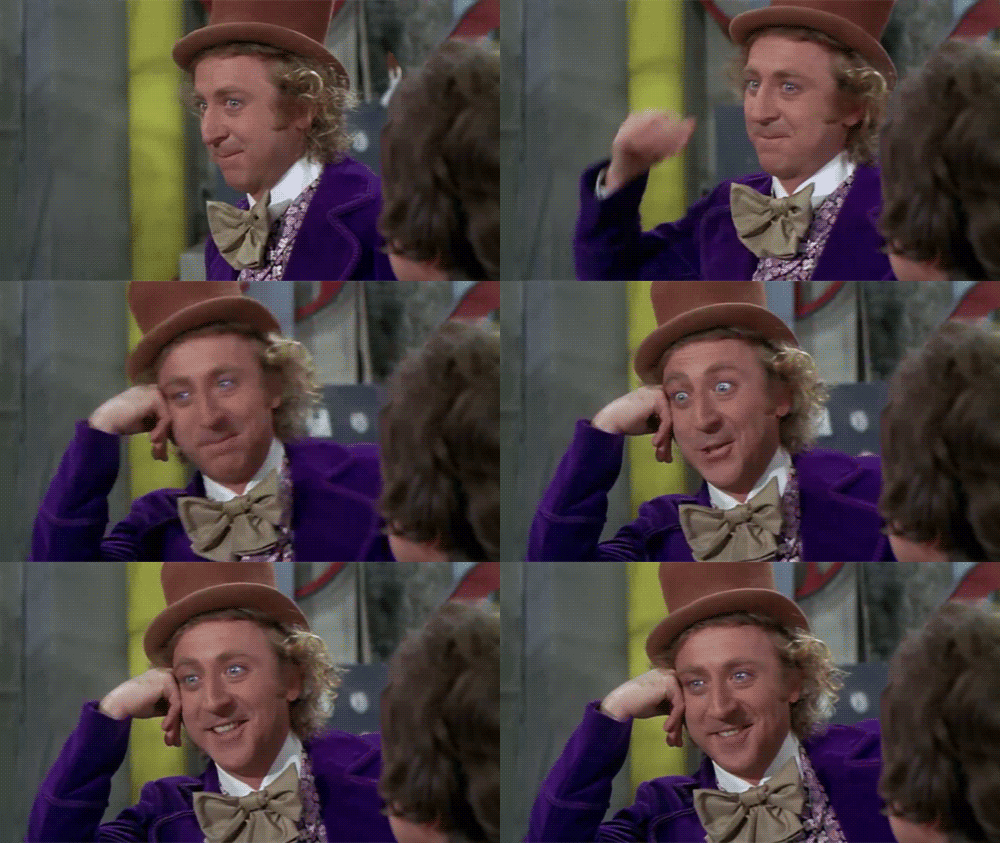
concept: willy wonka and harry potter take place in the same universe the ministry of magic haaaates Willy Wonka
“Mr. Wonka,” Dumbledore smiled warmly, looking down into the Pit from his podium. The members of the Wizengamot muttered disapprovingly, shifting in their seats. Willy Wonka, clad today in a bright magenta suit and tophat, beamed cheekily up at them from his chair, his silver-gloved hands cradling his chin.
“Mr. Dumbledore,” He replied brightly, with the barest hint of a lisp.
“I trust you know why you are here?” Dumbledores question was crisp and businesslike, but the twinkle in his eye gave away his amusement at the situation.
“Not at all! I’ve nary a clue,” Wonka wiggled his eyebrows. Dumbledore audibly stifled a laugh.
“You are accused of improper use of magic, improper use of muggle artifacts, and several counts of using magic in front of a muggle,” Dumbledore reminded him. He conjured a projection with his wand. Displayed in grainy sepia was Willy Wonka, arm around a boy of around 10. Behind his back, he twitched an ash wand, and machines in the background around them whirred to life, producing all manner of sweets.
The projection ran its course and collapsed, and Dumbledore stowed his wand back inside his robes.
Wonka smiled and fiddled with his hat.
“How do you plead?” Dumbledore asked, leaning forward eagerly for what would surely be an amusing trial.
“Not guilty on all counts,” Wonka said, perhaps a tad smugly.
The members of the Wizengamot muttered amongst themselves. Not Guilty? Impossible!
Dumbledore hushed them quickly. “Explain, if you would. We have, after all, quite a mountain of evidence.”
Wonka stood and brushed a bit of dust off his suit. He tipped his hat mischievously. “Of course,” he grinned.
“Firstly, use of magic shall only be considered improper whereby it is applied to cause harm or applied recklessly. All magic used in my sweets is rigorously tested for both safety and taste. It is not used to cause harm, but to bring joy.” Wonka paused to adjust his jacket.
“But surely,” Dumbledore said, leafing through his notes, “you cannot deny that you illegally charmed several thousand muggle artifacts?”
“Ah, but I can,” Wonka said, now twirling his cap in his hands. “Muggle artifact refers, of course, to any muggle made object. But, you see, I built those machines, each and every one. They are not muggle machines at all, but wizarding machines, built by a wizard. The factory itself, as well. You could argue that, as machines are a muggle invention, I still broke the rules, but then I could argue that every wizard dwelling with any charms applied to its walls is in violation of the law, as muggles were the first to make bricks.”
The Wizengamot glared silently. He was right, of course. Violating the spirit of the law was not illegal if one followed the letter.
“And the last charge? These are definitely Muggle children, are they not? No magical talent, raised in muggle society?” Dumbledore straightened his glasses and peered down at Wonka, his eyes still bright with intrigue.
“Not at all,” Wonka grinned, placing his hat back on his head. “You see, the ticket system was not nearly so random as I pretended. The tickets were charmed, they would only becomes visible to children with magical heritage. All the children chosen were second generation Squibs.” Wonka bowed low, as if he were finishing a particularly well executed play.
“Well, ladies and gentlemen, it seems no laws were violated after all.” Dumbledore stifled a grin at the groans of angry disapproval from the Wizengamot.
“But he very clearly violated the intent of the rules!” Spluttered a large, rather red faced wizard in the second row. “He’s just…cheating! He’s cheating!”
“Ah, this is true, but he did not, technically speaking, break any of the rules. He did not expose muggles to magic, nor enchant muggle made objects, nor improperly apply magic anymore so than any magical confectioner. I’m afraid we have to let him go.” Dumbledore smiled gently and put away the rather thick file with Wonka’s name embossed on the cover. For the brief second it was open, a list of hundreds of charges with “Not Guilty” inked beside them was visible. It was carried off by a house elf, and the Wizengamot began to file out until only Dumbledore was left.
“You’re a very clever man,” He called down to Wonka. “We could use you at Hogwarts, you know.”
“No thank you,” Wonka called back, grinning. “Skirting the law is far more fun!”
Willy Wonka is a fucking Slytherin.
I’d prevviously said ‘Yes! Gene Wilder! Wonk!’. Now there’s pics.
BUT…
OMG.
MS. FRIZZLE! (and the MAGIC School Bus).
She must be before the Wizengamot ALL the TIME.
(Is her excuse; ‘Well, it’s educational’???? And it WORKS?!!)
Cornelius Fudge sighed and rubbed a hand over his face. Behind him, the members of the Wizengamot muttered amongst themselves, wondering what his next move would be. When he finally looked up from his podium, all he could do was glare at the chipper redheaded woman perched on the arm of the interrogation seat in the Pit. A bright green lizard poked its head out of the collar of her planet patterned dress and skittered around her shoulders to stare back at him.
“Mrs. Valerie…” He checked the file again. “Frizzle?”
“Good morning, Minister!” She replied happily, a hint of a laugh in her voice.
“It’s 3:30 in the afternoon, Madam,” He replied. He was tired.
“Here yes, but in America, its 10:30 in the morning! Aren’t time zones incredible?” She smiled and he could see all her teeth.
Fudge’s eye twitched irritably and he took a deep, steadying breath.
“Do you know why you’ve been called before the Wizengamot today, Mrs. Frizzle?” He asked, shuffling the papers from her file.
“I’m probably in trouble,” she smiled serenely, absentmindedly petting the lizard. “That is, after all, what the Wizengamot deals in!”
Fudge stifled a groan as he began leafing through her file. He didn’t even know where to begin. “Mrs. Frizzle, you are charged with no less than two hundred and thirty two counts of violating the Statute of Secrecy. Note that this is one count for each muggle known to be exposed to magic through your actions, and not a reflection of how many actions you have taken.” He drew out a page from the file. “Actions that include unlawful use of a sentience charm upon a muggle bus, unlawful use on that same bus of indestructibility charms and some sort of curse or hex that made the damn thing not only unresponsive and utterly unusable to anyone but yourself and your students, but also made us unable to decharm, move or even hide it, several unlawful uses of shrinking charms, bubble head charms, transfiguration, and at least one unregistered charm of your own making that allowed you to leave the planet entirely!” He slammed his hand down on the podium. “Do you have anything at all to say for yourself?!”
Mrs. Frizzle smiled politely. “Prime Minister,” she said calmly, “With all due respect, I have a question for you. Have you ever captured lightning in a bottle?”
“Have I- What?” Fudge spluttered, taken aback by her odd question.
“Have you ever captured lightening in a bottle?” She repeated, eyes flashing.
“Of course I haven’t, what sort of nonsense-” He began, but she threw up her hand and interrupted him.
“Muggles have. They’ve known how to use the same energy that comprises lightening to light their homes for over 100 years now. They can generate what amounts to lightening in a bottle with water, or the light and heat from the sun, or the wind. They can carry music in their pockets. They have been able, for nearly 30 years now, to leave the Earth and stand on the Moon.” Mrs. Frizzle straightened her dress. “I have, yes, been using my magic to help teach my students, but what I’ve been teaching them is science! It’s a shame that we don’t learn science as children the way muggles do. They know how the planets move! They know why the Earth turns! Muggles have a wealth of knowledge that rivals that of the centaurs, and we just,” She gestures around incredulously. “We just ignore it! Did you know they are able to not only capture movement, but also sound on film? It’s incredible!”
Fudge waved a hand to silence the incensed grumbling of the Wizengamot. “Mrs. Frizzle,” he hissed angrily. “It does not matter how many trinkets and non-magical work-arounds the muggles have made, regardless of how incredible you find them. Their ‘science’ is not on trial here, you are, for exposing muggles to magic!”
“Minister, you do know my students are all muggle borns,” Mrs. Frizzle said, perhaps a touch angrily, her usual enthusiasm for science replaced by an anger at tech marvels being referred to as ‘trinkets’.
“They’re not the only ones who have seen your…Magic Bus!” Fudge roared, slamming his fist on the podium and eliciting a dull rumble of approval from the Wizengamot. “Mrs. Frizzle, since you have failed to mount a defense, we will now take a vote. All in favor of conviction?”
A sea of hands shot into the air.
“All opposed?”
2 or 3 hands were placed waveringly in the air, then quickly fell.
“Mrs. Frizzle, you are found guilty of 232 counts of breaking the Statute of Secrecy. The wand you surrendered upon entering the Ministry will be kept, and you are fined in the amount of 1,160 galleons. If you cannot pay this fine, you will be given a job on low level staff or doing community service until such time as the debt is paid. Good day.” Fudge closed her file and handed it the the Junior Undersecretary, who ferried it back to the Hall of Records.
Mrs. Frizzle stomped out, angry but not ready to give up. Luckily for her, they hadn’t taken her backup wand. She had classes tomorrow, after all, and they couldn’t very well explore the world of pollen without a proper shrinking charm. She made a mental note to stop by her cousin Xenophillius’ house to pick up her backup to her backup. She loved his house. Shaped like a chess peice, can you imagine?
This is why the Wizarding World of Harry Potter is just so…..dumb.
I think you’re all forgetting the obvious… Mary Poppins.
“Back again, Mary?” Dumbledore twinkled at the woman in the
felt hat standing ramrod straight in front of the chair in the pit. She’d
always been one of his favourite students.
Can you imagine how differently their lives would’ve gone if Ron, in trying to transfigure Scabbers, had actually transfigured him back into a human? Just take a moment to imagine McGonagall’s reaction if Peter Pettigrew had abruptly appeared in her classroom from Ronald Weasley’s rat. Take a moment.
Or if Ron had fucked it up a little worse and couldn’t get ‘Scabbers’ back and McGonagall had take him to disenchant him and next thing we know there’s a naked Peter Pettigrew sitting on McGonagall’s desk and the kids in that class learn six new swear words, a hex they will never dare to use, and a fear of Minerva McGonagall’s wrath that will be with them until the day they die.
Ten and twenty years later first years are being pulled aside and warned never mess around in Transfiguration seriously the last time a kid mucked something up in that class Professor McGonagall used two semi-legal hexes, took down a Death Eater and sabotaged the rise of the Dark Lord before Potter had time to get his wand out.
What most of Hogwarts learned first on that otherwise-unexceptionable day was that Professor McGonagall could sure scream loud.
Professor Flitwick’s Charms 5th-year Charms class was close enough to catch the full effect, and the door had been left open besides; en masse the students recoiled with shock and a miscast Hiccuping Charm broke one of the windows (out which the entire flock of ravens they were practicing on escaped to the Forbidden Forest where they only had to worry about centaurs, rather than annoying young humans with wands).
Up in the Divination Tower, Sibyl Trelawny preened over her foresight to have warned her students of an unprecedented catastrophe likely to occur before the hour was out.
Out in Greenhouse Five, a NEWT-level Herbology class looked up in puzzlement, and most of them were subsequently bitten by the Venomous Tentaculae they were attempting to propagate. It does not do to ignore a Venomous Tentacula when you’re prodding at its intimate parts with a cotton ball held in tweezers, so the class was cancelled while two-thirds of the students headed for the infirmary and the rest of them headed into the castle because if they stayed with the Venomous Tentaculae they’d be outnumbered, and nobody wants that.
And down in the dungeons, Professor Snape turned away from comparing Lee Jordan’s Pepper-Up Potion to spoiled cream at what sounded like a woman screaming from the entrance hall. At the second scream, he ordered the class to remain where they were and behave, sweeping out of the room just in time to miss Theodore Nott suddenly jumping up and yelping as if someone had put a crocodile heart down the back of his robes.
Fred Weasley stepped back from the unfortunate Slytherin, shared a smirk with his twin, and stuck his head out the door to make sure Snape had rounded the corner before leading the way out of the classroom.
–
Back in the Transfiguration classroom, about four minutes ago, it had started innocently enough. Ron Weasley, possessed of a broken wand and a lurking suspicion that most of the family’s magical talent had been soaked up by his siblings before he was around to get any, had attempted to turn his pet rat, Scabbers, into a teacup.
Scabbers had not become a teacup.
Scabbers, blast his useless furry little backside, had become a furry, vaguely teacup-shaped monstrosity out of which absolutely no one would have been tempted to drink, and to make matters worse, he still had a tail.
It was moving.
Harry was hiding a smile behind his hand. Dean and Seamus weren’t even trying to hide, elbowing each other and laughing. Parvati and Lavender were looking with disgust and horror at either Scabbers or him, and Hermione was opening her mouth, no doubt ready to tell him exactly what he’d done wrong.
Which only made it worse that he really thought he’d done everything right this time.
He snatched Scabbers off the desk (eww, the base of the cup had the same texture as rat feet) and turned away from Hermione. He made the wand movement again, picturing in his mind the way McGonagall had demonstrated it. “Erreverto.”
“Erreverto. Erreverto. Erreverto.”
It didn’t work. It didn’t work when Professor McGonagall stopped by and gave Hermione two points for Gryffindor for getting the spell perfect in both directions. It didn’t work when Harry made his successful transfiguration (Ron looked; the pattern was a little bit furry but it was definitely a teacup). Ron’s lips formed the shape of a word that would’ve made his mother box his ears had she heard it and attempted the reverse transfiguration, which didn’t work either.
Finally, faced not only with the indignity of failure but the threat of Scabbers being stuck like that, he’d gone up to Professor McGonagall’s desk.
“Um, Professor?”
Professor McGonagall looked up from the paper she was grading and looked from him to the squirming teacup. “Problems, Mr. Weasley?”
“Um, yeah, Professor. I can’t get it to work in either direction and it’s not fair to Scabbers to make him stay as a teacup just because I can’t do a spell right and can you maybe … ?”
“I suppose so, Mr. Weasley,” she said, and waved her wand in the exact manner Ron had been doing all along.
Nothing happened.
Professor McGonagall looked very, very puzzled.
“Now that’s odd,” she said softly.
As one, the other students rose from their seats and quietly moved closer.
She did not attempt the transfiguration in the other direction. Instead, she made a complex motion with her wand and murmured an incantation that possibly only Hermione recognized. The teacup squeaked. Professor McGonagall looked more puzzled than ever, and made a sweeping wand movement that ended with a sharp jab and uttered, “Arcanum finite!”
And there was a loud bang, and there was a pale, pudgy, and very naked man sprawled out on her desk, and she jumped back hard enough to knock her chair into the wall and screamed.
–
Having taught a particularly rigorous course of magical study to children and teens for quite some time now, Minerva McGonagall had become accustomed to certain things. Students who didn’t listen. Students who did rude things to the mice when they thought she wasn’t looking. Students who accidentally turned a frog or a raven into a flock of starlings or a school of strange slimy South American fish (and tried to solve the immediate problem by filling the classroom with two feet of water, neglecting to consider the gap under the door). Students who tried to transfigure their noses into a more appealing shape and wound up in the hospital wing regrowing their nostrils.
Naked men on her desk was something Minerva McGonagall had never had an occasion to get used to. What made it worse was that she recognized this one, and he’d been dead for more than a decade.
Inferius! was her first thought, followed shortly thereafter by Animagus, which collided with Peter Pettigrew! and produced the utterly horrifying thought of what if all four of them were Animagi? which didn’t bear thinking about at all, so her brain jumped to if he wasn’t killed by a Dark Wizard then why didn’t he say so? and realized there was only one possible explanation why, and about that time her eyes registered that parts of Peter Pettigrew she really doesn’t want to know about were flopping about in front of her face, and she was screaming as she jumped back.
The flow of invective which followed somehow failed to surprise her one bit. Some part of her registered, peripherally, the shocked faces of her students, but most of her attention was directed at Peter Pettigrew, who at very least faked his own death and at worst framed Sirius Black and if Black didn’t betray the Potters then who … did. And the words poured out of her, filthy English and filthier Latin while Pettigrew squirmed on the table, his face rage and guilt and fear and something shifty and contemptible, and he turned to look at the stunned students and lunged for Ron Weasley’s wand.
–
Severus Snape had reached the Entrance Hall by the time the scream died away and the invective replaced it. He almost smirked, amid the alarm; of all the things he’d never expected to hear from Minerva McGonagall … he took the stairs two at a time, still not noticing the students who followed.
He did notice the Herbology class, which had stopped on the way to the Infirmary and were staring transfixed in the direction of the Transfiguration classroom, but pushed his way through them, getting Venomous Tentacula pollen all over his robes in the process.
From the other end of the corridor came Professor Flitwick’s Charms class, with Professor Flitwick bringing up the rear and pushing his way between students.
–
Ron looked stunned as the man who’d been his pet rat snatched the wand from his hand; Professor McGonagal’s expression shifted to one beyond fury and when the entire class recoiled, it wasn’t from the naked man with the wand.
“Laedo!“ Minerva McGonagall roared.
–
Ron Weasley’s wand cast a Splintering Curse many years beyond its rightful owner’s abilities, and it did Peter Pettigrew the poor favor of eliminating the door, which might have slowed him down a bit.
–
Severus Snape flailed and skidded to a halt as the Transfiguration classroom’s door shattered. He stepped back just in time, and stared, jaw dropped in shock, as a naked man he recognized from his school days flew past him and bellyflopped against the wall, bounced, and collapsed to the ground just in time to avoid the “Exitium!” which followed and vaporized an impresive chunk of the castle’s stone wall.
Fred and George and Lee Jordan, determined to stay at the front of the crowd, had been pushed almost against Professor Snape by their fellow Potions classmates and some pollen-coated Hufflepuffs. Fred squirmed aside hastily as Professor McGonagall appeared in the doorway, the look on her face so utterly livid that Professors Snape and Flitwick both reflexively stepped back.
Snape tripped over George’s foot and fell against a knot of Hufflepuffs, releasing another cloud of pollen and knocking them backwards. Pettigrew saw his opportunity and took it, scrambling to his feet, stumbling sideways, and launching himself towards the gap.
And Minerva McGonagall made a thrust with her wand and said, “Perdo.”
In the very loud silence which followed, Filius Flitwick squeaked, “The Splinching Charm, Minerva?”
She might’ve looked embarrassed for a moment, and then she smiled as she looked down at Pettigrew, who lay on his belly, his arms and legs lying akimbo some distance away.
“Unorthodox,” she said, “but useful in a pinch. If someone would inform the Headmaster, and send an owl to the Ministry—-not Fudge, not Crouch, someone competent—-Shacklebolt, perhaps. Students, return to your classrooms, please. Mr. Weasley, I’m very sorry, but I do believe it’s impossible to return you your rat. However, the zero I was going to have to give you for the day’s work is entirely undeserved, as you were not transfiguring a normal rat. You may make the lesson up any time this week.”
–
The story was, of course, much embellished by the time it reached all the students. Versions of it had the intruder peppering Snape with a Glitter Hex or transfiguring Ron’s rat into a pair of boxers, and people had to be disabused of the notion that it had been Voldemort who’d been hiding as a rat all this time.
Snape gave both Weasley twins detention for tripping him, and took forty-seven points total from Gryffindor over the next few weeks for various pretend-subtle pollen references.
Kingsley Shacklebolt showed up with a team of Aurors in time to meet Professor Dumbledore; the Wizengamot launched an investigation into the events surrounding the Potters’ murder; the results turned into a scandal which saw the release of Sirius Black and the forced resignation of both Director Bartemious Crouch and Minister Cornelius Fudge. Director of Magical Law Enforcement Amelia Bones was confirmed as Minister of Magic shortly thereafte, and the Daily Prophet reported that Sirius Black (“Godfather to the Boy-Who-Lived!” “Framed, Abandoned, Condemned to Living Hell!” “Heart-Wrenching: His Release In Pictures, Page 17!”) was considering applying for a teaching position at Hogwarts, “but just for a year, I’ve been cursed enough for one lifetime.” (“The Prophet reminds its readers that the so-called “curse” on a certain Hogwarts teaching position is almost certainly a mere string of coincidences.”)
And, Minerva thought with relish some months later, it was almost three weeks before anyone attempted messing around in her class.
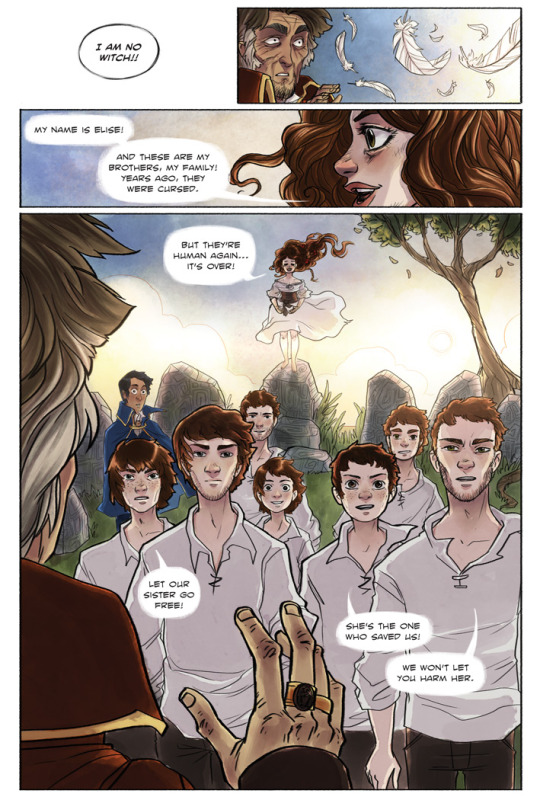
Since it’s Free Comic Book Day, I figured I’d share my short comic from the Valor Anthology, The Nettle-Witch, (pretty loosely) based on the fairy tale The Wild Swans. Something about the imagery and the locations in the story always made it one of my favourites to read as a kid, and I tried to get some of that feeling into the look of my comic.
PLEASE IMAGINE THE FIRST TIME AN ALIEN HAS ONE OF THEIR HUMAN FRIENDS DIE
‘so hey, that was a great funeral, cool outfits, always glad to learn more about your culture and stuff. So, when is she coming back?’
‘She- she’s not coming back’
‘Yeah, not as Megan, but when is her replacement coming back?’
‘We’re- not hiring anyone new for a couple weeks???’
‘no no no, you’re not getting what I’m saying- I want to ask her about that book she lent me- can I keep it for another week or two, or does her new version want it back?’
The humans stare at the alien and just. slowly start to figure out what the alien is saying. The alien shuffles nervously, their six spindly legs making a skritching noise that echoes in the cold chapel. Finally, the kindest of the humans takes the alien aside and-
‘hey. so. Us humans don’t come back when we die. Not like you do.’
‘what? No, but you clearly talk about reincarnation, and-’
‘Those are just stories, Six. When humans die, we’re gone. We don’t come back.’
The alien laughs ‘No, see, cuz that would mean that- that would mean. That Megan- Megan is-’ The alien cuts off the hissing noise that is their equivalent of a sob. ‘I have to go.’
The alien spends a week in their spaceship, the only place they can send communication to their Mother. When they come back, their carapace is a glistening new shade of red, and they’ve ended up as a different gender. When the lab adviser asks them how they are feeling about Megan-
‘Megan? Oh, yes, my previous version was very fond of Megan.’ The alien cocks their head, like a particularly thoughtful bird. ‘I suppose that I regret her loss. She was a valuable member of the team.’
The lab adviser lets this be- they are aliens after all. But later, when lab hours are done, the adviser notices Six double and triple-checking all the lab equipment, especially- well. The accident that took Megan will never happen again.
The book is never returned.
Now imagine the flip side: Sevan finds out his human friend is due to have a baby in six months. Six months! He asks, and finds that no, there’s no way to delay a human birth. In six months, a new version of his friend will emerge. Will they still like space operas? What about visiting that smoothie place in quadrant 6? Will they even still want to be friends?
His friend asks him to be visit the baby, after it’s born. Of course, of course he will. It’s the least he can do. There’s always that vulnerable phase after birth when you haven’t got the hang of the new motor controls, and everyone needs a helping palp for the first few months.
The night he hears that the new baby has been born, he wails quietly and recites the qualities of his friend that he will miss the most.
Three days later, he gathers his resolve and knocks on the hatch of his friend’s place. Strangely, the access panel hasn’t been lowered – rude. He’ll make sure that’s one of the first things changed. His friends partner opens the door and lets him in and there – there is his friend,looking tired but well, a miniature copy of herself held in her arms. Imagine his joy when he finds out that not only will he get to spend longer with his current friend, but there will be another friend to get to know!
Mumbling, the King looked away from his knight and muttered, “I need you to save the dragon… from my princess.”
Sir Rian looked at the King blankly. “Is this a jest, your majesty?”
“I do not jest,” King Harold says, looming in his throne. He, all at once, deflates, burying his face in his hands. “Word has begun to spread of Maria’s…peculiar pastime. I was supposed to have a meeting with King John next week, discussing the possibility of his son marrying my daughter.” The King points to one of the scrolls littering the ground. “I just received that cancellation this morning.”
Sir Rian looks at the floor and winces. He recognizes the royal crests from a half dozen neighboring countries and surmises that this isn’t the first cancellation.
“Oh dear,” Sir Rian says before he can stop himself. “Your majesty, the line of succession–”
“–will see Lord Calloway on the throne,” King Harold says, face still buries in his hands. He raises his head just enough so that Sir Rian can see the unhealthy bags under his eyes. “Unless my daughter, my dragon-enslaving daughter, can be brought around.”
If Lord Calloway sits on the throne, Sir Rian thinks, the people will set it on fire. Having just come back from patrolling the southern reaches of the kingdom, fending off pirates, that’s not a scenario he’s fond of. “Surely there’s some diversion you can offer her, your majesty? I hear the princess is rather fond of swordplay. A new tutor–”
“Good god, man,” King Harold says, “does no news reach our borders? Maria has already mastered swordplay. Then archery, then hand to hand, then some infernal thing called an ahlspiess. I didn’t even know what an ahlspiess was and my daughter used it to win last year’s knight’s tournament!”
“It’s a type of spear–”
“I know that now!” The King takes several deep, calming breaths.
But what if the princess was in the tower because she was the dragon?
Like the queen gives birth and oops it’s this adorable little scaley lizard with tiny wings that she can never quite seem to fold right
None of the King’s advisors or doctors can explain it, no one can remember anyone who might have cursed the royal family, plus sire she’s clearly yours still I mean look at those eyes
They just kind of accept it and keep her in a tower so no one tries to slay her
The queen or castle servants reading bedtime stories to the toddler princess, who’s made a nest of her favorite toys and some jewelery she stole off her mother, and when she laughs little puffs of smoke come out of her mouth
The king being so proud when she flies across the room for the first time
And once the princess comes of age, confused knights breaking into the tower to find a twenty foot long dragon sitting at the vanity getting her horns polished by her handmaidens
and the “kidnapped” princess is her girlfriend?
this feels like a minotaur myth gone amazingly right.
Okay, who brought this back? Because I haven’t seen notes on this thing in literally months.
She goes flying around the surrounding kingdoms, just watching and listening.
And pretty soon she has a dozen girls sharing the tower with her.
Some were being pushed to marry, or promised in marriage to someone they hated. Some were already married.
Some were poor, or hunted, or enslaved.
Some were thrown out, abandoned, banished.
There’s a princess there, yes, one who would rather sit in the solar and read books than marry a boorish prince and interact with her subjects all day.
There’s a wizard-student who fled her university after one of the professors tried to curse her for disagreeing with him.
There’s a girl who ran away to be a knight, and a girl who was thrown out for being pregnant, and a wife who ran out the door with her toddler carried in her broken arms, her belly swollen and unwieldy, and stories circulate from the bar the next day about how the dragon swooped down and stole away a man’s wife.
Probably ate her, he says. Good riddance.
There’s a formerly-wealthy merchant wife, cast out by her husband in middle age so he can wed someone young and pretty.
There’s an elderly grandmother who’s outlived her family and her usefulness.
A street child, rag-clad and starving. A baby, left abandoned on a hillside.
It begins to filter through the land, spoken from fathers to daughter, husbands to wives, employers to servants: if you are bad, the dragon will take you. if you are stubborn, or willful, or refuse to marry, the dragon will find you. if you are useless, or slovenly, or disobedient, you will be thrown out and the dragon will pluck you up in its claws and take you back to its lair filled with bones.
They do not understand that this is not a threat but a promise.
They do not know that the version their servants tell each other, their wives tell their daughters, their mothers tell circles of friends, is “if you are desperate, the dragon will find you. if you want out, the dragon will rescue you. if you pause outside, and tell your fears to the soft beating of wings somewhere in the sky, you will fly, and the dragon will carry you home.”
There are bones, but they are surrounded by living flesh.
The tower, the Princess’s Tower in the central kingdom, is hidden by the finest spells and left alone by longstanding tradition. The nature of the Princess’s curse is a matter of speculation, but most likely, people say, she is under some fairy’s enchantment, and she will sleep for a hundred years until the right prince finds the way in.
The wizard-student was fairly advanced in her studies, and is quite good at teaching the runaway scullery-maid and the young unmarried mother turned out when her belly showed. The gates to the far reaches of the tower grounds open to a hillside two kingdoms away, and to an alleyway in a major city, and to a deep tideswept cave near a fishing village and a harbor, and to a storage room in the oldest wing of the Princess’s home palace.
The rich former merchant’s wife sorts through the dragon’s hoard of gold and gems, and delivers instructions to the runaway postulant and the worn old farm wife; dressed as a young clerk and a common tradesman, they go to call on this merchant who sets the best prices, and that factor who has misplaced goods available for a low price, and this manufacturer of looms and that seller of books.
The farm wife knows the best sheep to buy at market, the ewes who will bear twins and the lambs which will have the finest wool. Another country over, this time in the company of “his” elderly “father,” she buys cows that will give good milk, and chickens that will lay good eggs.
An elderly wizard visits a university, and inquires after their library; she is let in, and watched as she pages through books filled with arcane topics in languages she can’t understand; back at the tower, the wizard girl and her students capture the pages in a scrying crystal.
A pretty young fishwife smiles at the vegetable-seller as her daughter clings to her skirts, and soon the girls and women of the tower have seeds to plant. Looms hum, and dyestuffs are boiled, and even the poorest in their former lives wear bright dresses, or breeches and tunics if they prefer.
The dragon brings back a pirate woman from the harbor, stolen from the hangman’s noose while the crowd cheers; she knows where there is treasure stored, and soon the young girls have gems to play with, and the girl who ran away to be a knight has someone to learn proper swordwork from.
The little girl whose first flight was in her mother’s broken arms wants to be a blacksmith; when a swordblade breaks, the dragon breathes on it, as long as needed, while the child determinedly hammers it back together.
The dragon princess surveys her kingdom with approval. It is small, and tonight she will fly over a small town, where she heard breaking crockery and yelling last night, to see if someone steps out into the darkness and wishes for a better life, and tomorrow there may be one more.
Damn it I want to write something long on here but I hate typing on my phone. But:
Yes, the women saw it as a promise. Something they treasured when they needed it and gave them hope when they forgot what hope looked like. But the men saw it as a threat, and like all threats, they wanted it gone.
It started as a whisper in quiet inns and rowdy pubs. Just a date and a place to meet. The first week, only five turned up, but they listened to the stories of the dragon and they knew something needed to be done. So the next week they brought friends who brought their own friends until the little house was overcrowded and pouring out into the streets. But the voices were still heard. The voice that cried out to stop the dragon and kill it before their kingdom was ruined for good.
And so they crept up to the tower in the cover of darkness, their footsteps careful as if expecting to step on bones.
But each had a smile on their faces: how could one dragon last against the might of men?
But they had been waiting, the women rescued. Knowing the men were coming, they trapped them. The farmers wife with snares and traps that worked just as well for men as for foxes. The fisher with her trusty nets capturing the men in trees. The pirate holding swords made by the hands of the girl and the wizard girl with hands bright with magic ready to stop them in their traps.
A threat, thought the men, and now they knew it was true, the the little blacksmith girl looked down at them, fallen well before reaching the dragon, and made them a promise. If they went after their family again- and the dragon has made each of them into a family- they would stop at nothing to protect her.
And the dragon watched on, knowing she would protect them too, for as long as she could, before she spread her wings and flew to the wives and sisters and daughters of them men who hunted her, and offered them a place at her side.
beauty and the beast but reverse, i kiss the love of my life and she turns into a sick fucking monster and it’s awesome
shrek
No, fuck you, post un-cancelled
This is good shit.
A girl is born to loving parents. A king and queen, a noble and his wife, an inventor and his spouse… same story, different versions, and all. are. true. Tragedy strikes the mother– though god, why always the mother? Let it be the father this time. He dies; we need not explain how. The stories never grant their dead women such courtesy.
Her husband dead, the woman remarries. She marries as a clever political maneuver, to keep her throne secure; she marries for new love and the promise that her daughter will have another parent to be loved by; she marries out of desperation for security in a world that grants her little without a ring on her finger.
She is betrayed. The new husband, the step-father, does little to deserve his new titles. He is cruel, he is neglectful, he is absent. Perhaps his wife does not survive, or if she does, she is reduced to a shadow of her old self. This, too, is an old story with many versions.
Then the witch. The woman uncontrolled, the woman powerful, the woman terrible. She comes and she brings fear and magic. The magic is change.
“I give you a gift,” she says, or else, “I curse you.” Perhaps she says, “I curse you,” to the step-father, but to the daughter this is a gift. Words can mean more than one thing; that is their very great power.
“I curse you, girl,” she says. “When you receive true love’s first kiss, you will become a monster. You will be huge and terrible, a threat to all. You will have terror in your face and death in your hands.”
And the girl, she is afraid. But this is not new. She has been afraid for years.
Perhaps she finally flees to the forest, terrified of both her step-father and now herself. She swears off the company of men. Lost and hungry, she thinks she will die, but she is rescued by a company of women with untamed hair and pickaxes in iron-palmed hands.
Seven become eight.
She finds a home amidst these women. She shares a bed until her own bunk can be built, but by the time the new bed is framed, it isn’t necessary. It’s dangerous for the cursed girl to feel so tenderly towards another person, but this is not a man she is beginning to love, so… surely that’s safe, isn’t it? Surely true love’s kiss exists only between a man and wife; after all, that’s what the stories always said. So one day, she lets herself fall, and they kiss.
Or– perhaps, after the curse, she remains in her home. Cruel as this home and family is, it’s not so simple to just leave. People who say this have never experienced it. She continues to live in the shadows of her own house, flinching at shouts and obeying orders. She scrubs, she cooks, she launders– but in the small private moments, she is gentle still. She feeds the mice and scatters cornmeal for the birds. She coaxes a whipped stray dog to the kitchen doorstep, day by day, giving it food and water and all the time it needs to believe that her hand will not strike it. Slowly, it comes to trust her. The broken tail starts to wag; the sad eyes brighten. And one day, as it lies curled up in her lap in an ash-streaked hearth, the dog lifts its head and timidly licks her cheek.
The curse breaks. The curse breaks. The curse breaks. It always does. It always will. Change is inevitable: that’s the story’s promise.
All this time, the girl has been afraid of becoming a monster. She does not want to hurt others like she has been hurt. But she has been cursed, and now kissed. She grows. She becomes huge, and therefore terrible (isn’t that always the case with women?). She can no longer hide in corners, or be hidden away in locked rooms.
She is twice as tall as her step-father, and five times as strong.
She is powerful.
“My, what big hands you have,” the woodswoman whispers, marvelling, her pickaxe-callused fingers wrapped around the girl’s. “What strong arms you have. What long legs you have. I’ve never seen a gem as wonderful and unique as you.”
“Kill the beast!” shouts the step-father, who tripped over the stray dog in the courtyard– and his daughter roars “NO,” rising over the garden wall from where she has been sitting all afternoon feeding her birds and mice. She was afraid of her strength with their fragile bodies in her hands, but now in her rage all she feels is brave.
As the witch said, it is true that her face brings terror to those who look on it. At least, to those who look on it when she is enraged. An angry giant is terrifying to most, but especially to those who have earned her wrath. The only sad thing about this is that the girl had to be made dangerous before her tormentors finally learned respect for her rage and fear.
She stays in the forest, or she goes to the forest. One way or another, the cursed girl ends up there, in the wild, outside of society. Forests are places of power, of un-making and re-making, of disruption and interruption, where rules change and queer things are common. All the stories say this. Forests are for witches, and giant women, and all other monsters.
“She steals babies,” people whisper in town. (But the truth is that it’s not stealing if desperate mothers leave their babies in the forest loam, swaddled against the cold as well as they can be, with notes begging for their protection. Please, I cannot care for this child. Please, he’ll kill her. Please, nobody can know. Please, she’s my firstborn. Please take her like you took the whipped dog, the half-drowned cats, the beaten horse.)
“She kills huntsmen!” people cry in town. (But the truth is that these men were hunting women, runaways and lost girls, or the woodswomen of the mine.
Eight have become ten, fourteen, twenty-five. The cursed girl has learned to swing both a pickaxe and a club the size of a tree. She will not let harm come to the new family she has found.)
“She is a beast!” people howl in town. “She has hard, rough skin like scales! She has hair all over! She has a hooked nose! She is dusky, brown, black as night! She is lustful, she is angry, she is unrepentant!” (The truth is, these are not things that make someone a monster.)
The girl knows now that the curse is a gift. Words can mean more than one thing; that is their very great power. Words are magic, and magic is change, and change– thank goodness– is inevitable.
Gather around my children and you shall hear of the most terrible, most implacable, most improbable friends ever met by our people. They came from the third planet of a tiny system, surrounded by desolate space. Not one sentient species for hundreds of lightyears, and they managed to propel themselves into space.
We watched from afar as they developed slowly. We watched as they warred among themselves, brutal and savage. We watched as they rendered regions of their planet uninhabitable to themselves, a hardy species able to adapt to even the most hostile of environments. We watched as suddenly and without warning they united under four banners, the rest falling by the wayside. We watched as they expanded into what we had begun to use as a buffer zone, to allow these humans to burn themselves out in.
But they did not burn themselves out. Despite their warring among themselves. Harsh people. Humankind is a race of warriors, do not be fooled by the eloquence of their diplomats. In their own words, “All diplomacy is a continuation of war by other means”. Their greatest artists and philosophers were born from blood and conflict. I had the privilege once to view a painting by one Pablo Picasso, entitled Guernica. It was a savage piece, with not a drop of color. It showed the horrors of war, and the irony of it all was that the painting hung in the office of one of humankind’s generals.
It was sudden, when they burst from the containment zone. When they realized they were not alone. And we, with heavy hearts, prepared to fight them bitterly and to the last. Imagine then, our surprise when humanity embraced us among the stars as long lost brothers. They were overjoyed to discover they were not alone in the darkness. Despite their brutal and warlike culture, despite their glorification of death and violence, their people do not seek out combat. An ancient general of theirs once put it thusly “Although a soldier by profession, I have never felt any sort of fondness for war, and I have never advocated it, except as a means of peace”.
For centuries humanity worked to better itself. They unified under a single Interstellar Empire, the Empire of Man, the Human Empire, however you called it. They enjoyed art and music. They became leisurely at home, exploratory in the field. Their weapons of war were long gone, beaten into plowshares as they say. Humanity was finally at peace. There was no conflict among them, a few border skirmishes for certain, and they kept a small standing military, but nothing more than that. We considered them domesticated.
At first we were surprised at their transformation, then overjoyed. We welcomed them into the fold of the cosmos, embraced them as they would embrace us. We thought we knew humanity then, that we had seen them at their best and their worst. We were wrong, so very wrong. We did not truly understand humanity until the Texar-Hakara came into the void between the stars.
Seemingly more brutal, more bloodthirsty than even the humans, they swept into our region of space like conquerors. They smashed whatever feeble resistance the Yungling managed to put up, took their planets, enslaved the survivors, and pressed on. The Junti were next, utterly destroyed. The four great races left, ourselves, the Itaxa, the Kukrama, and the Illnaa, banded together to try and stop them. In our arrogance, we did not include the humans in our pact. Too few in number, too weak in frame, too backwards in technology we thought.
The Texar-Hakara hit our borders like the great wave that sweeps life from the beach. We hardened our hearts and prepared for the worst. Seeming without pause they crushed our border defenses. They obliterated the first fleets we sent to them. The Itaxa fell to the Texar-Hakara, enslaved, killed, scattered to the corners of the galaxy. Then the humans sent us an offer, a request really. They asked to fight alongside us.
Bemused, we accepted. What else could we do? Deny them the right to fight with us for their very survival? We thought to assign them as rearguards, to ferry our people to safety after our fleets fell. We thought wrong.
Humanity swept into the stars with a fury unmatched by any other. Their fleets were not the heaviest. Their guns not the most accurate. Their soldiers however. Their sailors. Their warriors were unmatched by any others in the cosmos. I remember the first battle in which the humans fought the Texar-Hakara like it was but a single solar cycle ago. Our forces were on the brink of breaking and fleeing. Our ships were gutted ruins. Our fighters exhausted and out of missiles. Then humanity fell upon the flank of the enemy, and the full force of the Human Empire was unleashed in a single moment of utter fury. Landing craft spat across the distance in an instant, slamming into enemy hulls and disgorging humanity’s greatest weapon, their Marines. In close combat humanity is unstoppable, and so they took the vast distances of space combat out of the equation.
Their ships belched fire and plasma. Lasers crossed the vast distances in the blink of an eye. Half the Texar-Hakaran fleet was obliterated in minutes. The other half turned to face this new enemy, only to be wracked by internal explosions as the Marines did their work. Their greatest ships turned on the rest of the fleet, a handful of humans holding the bridge against waves of enemy attackers to turn the tide of battle.
The Interstellar War came to a screeching turnaround. The advance of the Texar-Hakara halted, like it had hit an immovable wall. In many ways that is what humanity is, an immovable, implacable wall. Then, with the ferocity humanity is alone capable of, they routed the Texar-Hakara. Not from that lone battle. They pushed them out of Itaxa space, liberating the slaves. The space of the Junti and the Yungling was swept clear of invaders. Then the Texar-Hakara committed the gravest of sins in humanity’s eyes. They warped a fleet to Earth, jewel of humanity’s empire. They burned that blue and green world. They destroyed it, and the trillion people it housed.
Humanity is a forgiving race my children. Even their most terrible of wars have resulted in lasting friendships between nations. When they left millions dead and broken on the muddly fields of their world, they rebuilt the aggressors. They raised them from the mud, dusted them off, and welcomed them back into the fold. But there is one thing that humanity cannot, will not, tolerate. It is abhorrent to them my children. To strike at their home, to strike where they raise their young ones. Where they leave their mates and non combatants. To strike there is to raise the ire of the human race, truly.
Humanity raged. Their attempts at obtaining the surrender of the Texar-Hakara halted. The war turned from a righteous war of liberation to a furious and hateful war of retribution. We begged the humans to stop, to leave what few planets the Texar-Hakara had alone. Our pleas went unanswered for months, until a single human ambassador came to us. His face was cold and emotionless. He told us, in no uncertain terms, that the Texar-Hakara had doomed themselves and that any trying to aid them would suffer the same fate. Quietly we watched then, as humanity wiped the Texar-Hakara from the stars. The Texar-Hakara pleaded for mercy. They offered their unconditional surrender. They came to us and begged on bent knee for us to reign in the mad dogs we had unwittingly unleashed into the universe. Humanity had for so long repressed their warrior culture. Tried to become better. Then we had given them back into the fires of war, and humanity had awakened it’s warrior past.
The Texar-Hakara ambassadors were taken from our halls by grim human Marines and thrust out airlocks. Finally there was but one planet left, and we came to the humans, we pointed to our own losses, our own dead friends some of whom had lived for longer than humanity had been among the stars, and we begged the humans not to take the last of the Texar-Hakara’s lives.
I watched, children, I watched as the Texar-Hakara’s world burned. As humanity left but one of their planets alive, a simple backwater colony of no more than ten million. Ten million, out of the trillions. Then the leader of the human military turned to me, and with no emotion in his voice, told me that humanity accepted the unconditional surrender of the Texar-Hakara, and walked off the bridge of my ship.
My children, the lesson here is that a warrior past is never truly gone. Only buried, mayhaps even wiped from living memory. But gone? Never. Humanity showed us that.



 saratogaroad